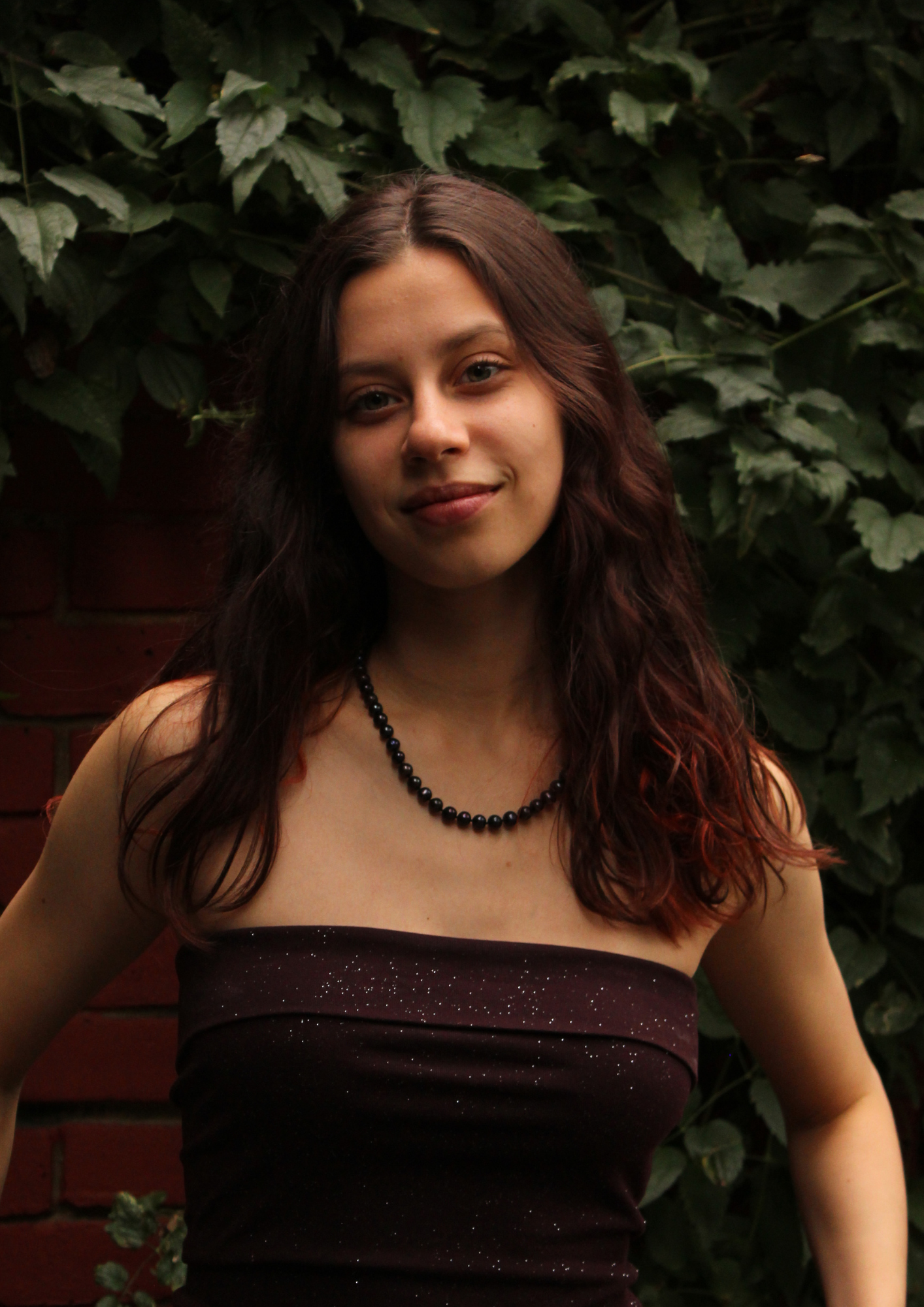
I’m Diana, a Russian-Armenian artist and theatre-maker based in the UK, and as so eloquently hinted by the title of this article, I am currently the Writer-in-Residence at the Armenian Institute.
About me
Having moved to the UK at a young age, I assimilated well enough to British culture and felt removed enough from my Russian-Armenian heritage, to have the questions “Where is home? And what is this mysterious notion in the first place?” forever haunt my mind. This blessing and a curse led me to develop my artistic practice intertwining my heritage, personal histories and experience of migration.
A throwaway comment I received from a classmate at school in England unintentionally shaped the way I think about my work. Imagine this milky-hair grey-eyed boy, who in all honesty resembled the pre-teen King Edward VI (before he succumbed to the Tudor brand and turned ginger). I think I remember him that way largely because we were in history class back then. As always I had been asked to read out the name of some slavic historical figure, because in the eyes of my teacher, being Russian meant I was proficient in Polish, Czech, Serbian, and every country that could be considered slavic. Me struggling to pronounce a name foreign to my native tongue, seemed to shock Edward VI. To him all slavic surnames sounded Russian and it was strange that I couldn't pronounce a name that supposedly was just like my own.
Me: Well, firstly my surname is actually Armenian and../
Edward VI: What?
Me: …One side of the family is from Armenia.
Edward VI: I swear I thought Armenia was a made-up country, you know, like Neverland.
I don’t know what was more troubling at that moment, the crude generalisation of Slavic people or the erasure of Armenia as a whole. This moment is when I realised that my identity caused a lot of confusion in others and in myself too. This disorientation felt lonely. I wanted to be sure of who I was, to be in control of my identity, and so I tried to make it digestible. I reduced myself to a generalisation and erased bits that were hard to make sense of, becoming easy to relate to, easy to connect with.
That was until I moved to London, where global languages overwhelmingly succeed English on the streets, where artists speak proudly of their cultural identity, whether it caters to a British audience or not. Here, I also met many who, like me, felt disheartened. However, seeing work that authentically translated or, more accurately, relayed stories coming from a different language or culture, inspired me to do it myself and to help others like me.
In all honesty, it took much longer to think of myself as a Russian-Armenian artist. Even now, reconnecting with my Armenian identity feels like tracing pencil lines that were erased years ago, re-mapping a dis-jointed route. When I inevitably get lost, I remind myself that if Armenia is a ‘made-up’ country, I too am imaginary. While I can’t reconstruct everything I turned away from, I can fill in the gaps and chart the realm I want to explore.
My work
Over the past couple of years I have focused primarily on working with intercultural narratives. Being part of a diasporic community has given me a unique ability to resonate with other creatives who bring their own heritage into art. I have cherished the work created with East Asian, Ukrainian, Romanian, Irish and Welsh collaborators.
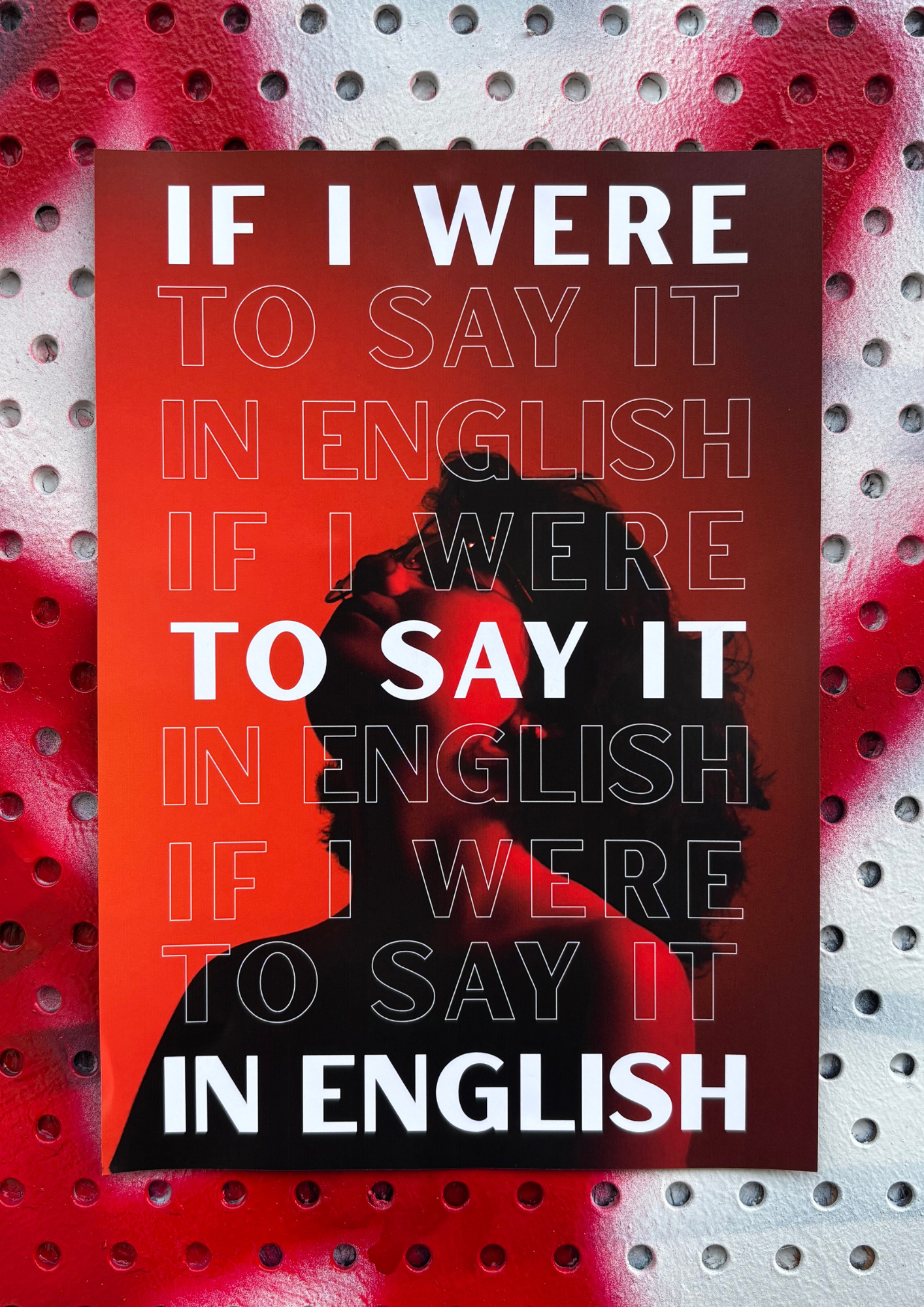
Most recently I directed a spoken word theatre performance, If I Were to Say it in English by Thea Lungu – a Romanian poet and performer based in London. The story follows Nath, who begins to recount her experiences as an immigrant in the UK to untangle complicated feelings towards her country. The play explores what happens when English fails in translating emotion, an experience I am sure sounds all too familiar for many readers of the Armenian Institute’s blog.
If I Were to Say it in English will run at the Roundhouse on the 30th and 31st of October 2026, and I am thrilled to invite you to this performance that has truly been pivotal to my artistic practice. Book your tickets here.
What actually is a Writer-in-Residence?
A writer or artist-in-residence is a creative professional who enters a place, organisation or community, that hosts them for a set period of time, during which said writer or artist develops their creative project, as well as engages with the life or work of their host. These opportunities are often organised by Foundations, Arts Councils, and Educational Institutions. In my case, being enrolled on a Bachelors of Arts programme at the Royal Central School of Speech and Drama enabled me to select and reach out to a cultural organisation that most closely aligned with my artistic interests. As a result, the Armenian Institute kindly agreed to host me and actively participate in the organisation’s life while bringing an original project into being.
In the coming weeks, this article will grow into a blog series covering remarkable events that have or will soon occur at the Armenian Institute. In addition, I’ll write features to commemorate Dreams for the Future, a special project foregrounding Armenian creatives, initiated by the Armenian Institute to celebrate its 25th anniversary. By way of interviews with the artists, I hope to take a step into their disciplines and practices to explore how each of them brings Armenian heritage into the future.
Another thrilling endeavour that I’m bridging forward in my time here is launching the Armenian Institute’s first ever Mail Club! I can already sense your slightly confused expression on the other side of this screen, so let me tell you what this Mail Club package actually is, what it will look like, and why you should definitely order one.
Mail Club
A Mail Club package is a letter-sized piece of physical mail that contains exclusive goods like art prints, poetry, stories, stickers, and more. The theme of our edition is the Dreams for the Future project where the work of commissioned artists and their dedication to Armenian heritage will serve as inspiration for the design and written content of the package. The essence of Dreams for the Future will be combined with archival finds that I aim to excavate from within the Armenian Institute’s extensive collection of library holdings and personal archives.
Visit my page under the Dreams for the Future project.
We were inclined to create this one-of-a-kind experience that can connect us to our friends over any distance without using the Internet, precisely because being part of a diasporic community often means staying in touch online. But being able to touch things handcrafted intentionally for you can inspire a sense of connection that can't be felt over a screen. And what you’re left with are unique pieces of memorabilia to remind you of our community long after receiving this package, because it won’t get lost in your inbox or somewhere in your phone's photo gallery. Please note that delivery is only available for the UK and US, use the discount FREEDELIVERY.
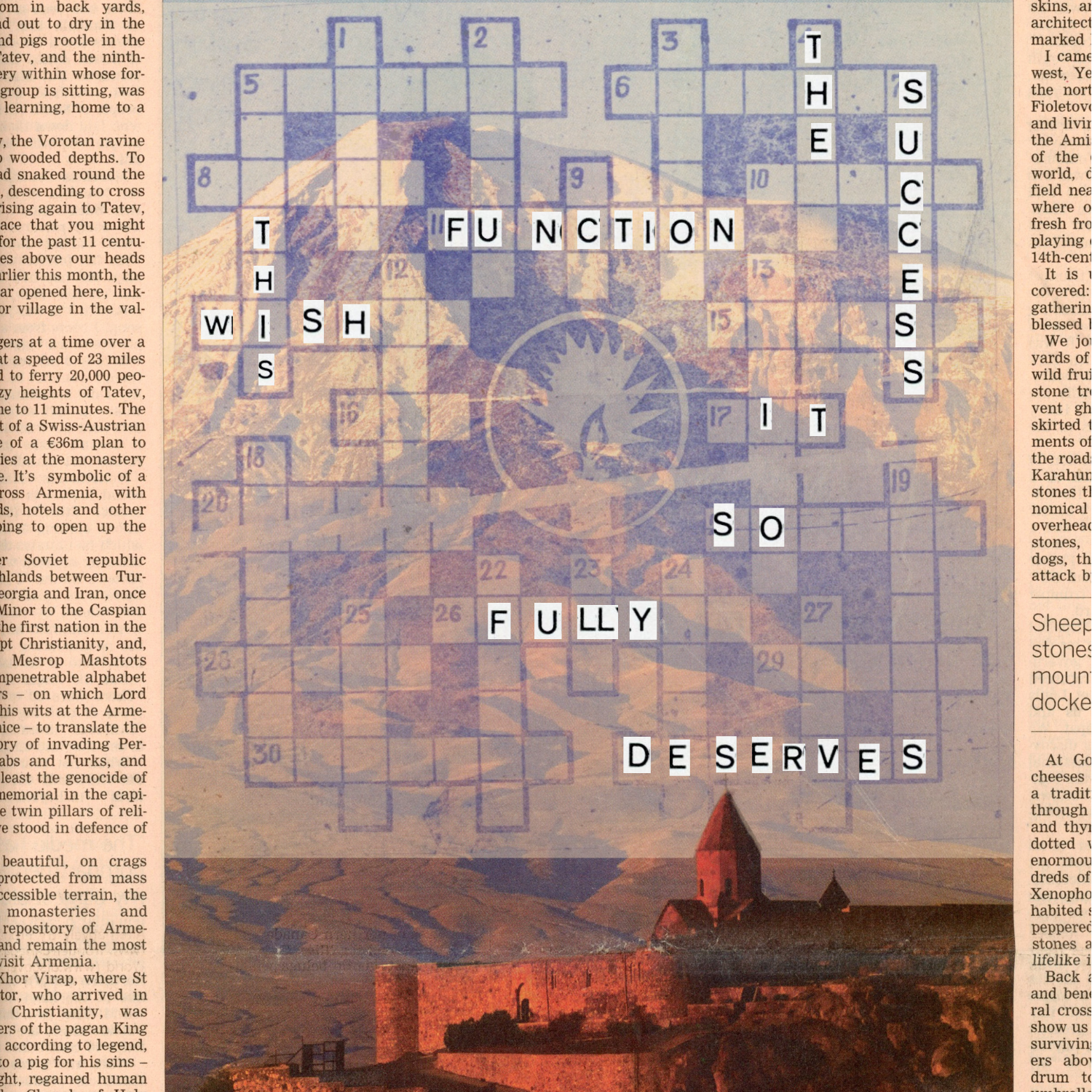
A Mail Club package is a letter-sized piece of physical mail that contains exclusive goods like art prints, poetry, stories, stickers, and more. The theme of our edition is the Dreams for the Future project, where the work of commissioned artists and their dedication to Armenian heritage will serve as inspiration for the design and written content of the package. The essence of Dreams for the Future will be combined with archival finds that our Writer in Residence, Diana Arushanian, aims to excavate from within the Armenian Institute’s extensive collection of library holdings and personal archives.
ATTENTION: DELIVERY AVAILABLE ONLY IN THE UK AND US - add the coupon FREEDELIVERY
On this sentimental note, I want to direct you towards our Instagram and Facebook where we will keep you updated on the development of our Mail Club and the publication of future articles.
I am extremely grateful for this opportunity to connect with the Armenian diasporic community with the help of the Armenian Institute, and for their interest and support of my artistic development, which I hope to share with you across these exciting undertakings.