
Erin Piñon, Operations Manager
In recent months, oral histories from our National Lottery Heritage Fund–supported Heritage of Displacement project have been included in a display at the British Library. Members of our London-based community have since taken part in three sold-out tours of the Britanahay Բրիտանահայ: Armenian and British display, led by our colleague and collaborator Dr Michael Erdman, Head of Middle Eastern and Central Asian Collections at the British Library. (You can read Michael’s blog here.)
When we launched Heritage of Displacement, we hoped it would open doors and shed new light on the UK’s diverse and vibrant Armenian community. And it did. You shared with us your family histories, archives and memories, and with that, stories of the many places Armenians have called home. However, one narrative stood out for its warm and exciting recollections of Manchester, a city whose connection to Armenian history is richer and more surprising than many realise.
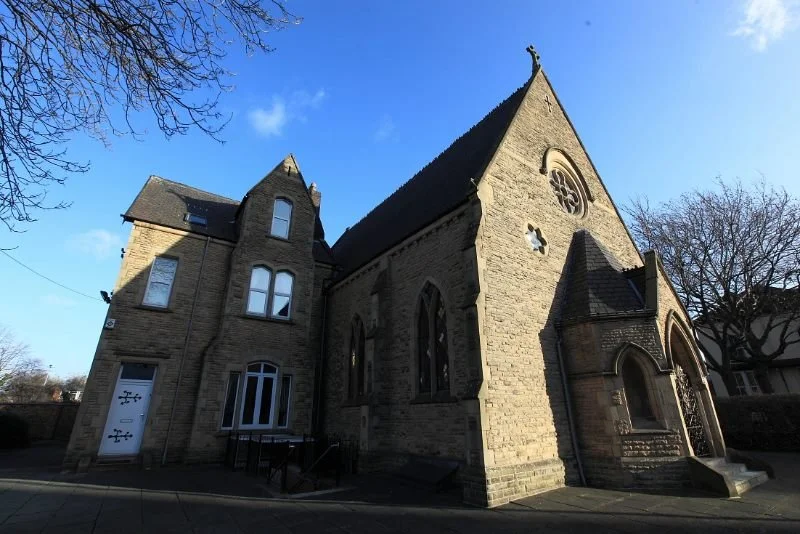
Holy Trinity Church. Image source: Artur Bobikyan - Armenians In Manchester (ACYO).
Manchester may not be the first city that comes to mind when thinking about Armenian history, yet it holds a remarkably rich story—one shaped by merchants, textile workers, families, and resilient journeys across continents. Manchester, or Cottonopolis as it was nicknamed in the 19th century for the role it played in the global cotton industry, is home to the country’s first Armenian church—Holy Trinity (Սուրբ Երրորդություն). Established in 1870, the Church embodied the spiritual needs of a growing Armenian population, who became some of Manchester’s most instrumental actors in the textile trade. As an art historian with a soft spot for liturgical furnishings (altars curtains, covers, hangings, etc.), and a keen interest in Armenian mercantile history, the decision to travel north was an easy one.
My journey to Manchester began with the Armenian Institute’s Heritage of Displacement project, which has encouraged us to look more closely at the many places Armenians have rooted themselves across the world. I began with the oral history of John Stambollouian, recorded as part of the project. His vivid recollections of his family’s migration from Kayseri and Smyrna, their early years in Manchester, and their involvement in the cotton industry created a compelling map of places for me to explore. Before setting off, I spent time with his interview, absorbing the details of his grandparents’ arrival in the 1890s, his father and uncle’s work in the mills, and the hum of textile machinery that seemed almost to echo beneath his words.
To prepare, I also turned to several key historical resources. The Archives+ essays on Armenians in Manchester offered clear and engaging insight into the early merchant families and their community networks. (See also here, and here.) Joan George’s Merchants in Exile: The Armenians of Manchester, England 1835–1935 brought a deeper sense of texture and nuance, while the Manchester City Council’s overview helped anchor these stories within the wider evolution of the city. With these materials—and John’s family narrative—in mind, I set off to trace the Armenian presence woven through Manchester’s streets.
My first stop was the Manchester Art Gallery, where I sought out a painting of the interior of the Royal Exchange. I had seen images of it before, but standing before the painting in person was something else entirely. The artist captures the energy and sweep of a space that once pulsed with the global cotton trade. This was the site of John’s uncle’s final cotton deal, and a place where Armenian merchants, newly arrived from Istanbul or Smyrna, would have first learned to navigate the distinct rhythms of Manchester’s commercial world. The painting offered atmosphere, a sense of the environment in which Armenian traders once worked.
After the gallery, I found my way to the Armenian Taverna, a long-standing community haunt. I was warmly welcomed by Arman Vardazaryan, proprietor and steward of this now historic site. While the upper floor offers chic, modern flair, the basement level is where the charm of the Taverna really starts to sink in. As Arman showed me around, proudly pointing to the walls covered in photographs of Mancunian Armenians, it became clear how places like this function as quiet community archives. Arman also spoke generously about his wish to share this history more widely, offering to link patrons to a dedicated page on Armenian history via a QR code placed on each and every menu in the restaurant. Our team especially curated a selection of Mancunian and food-related audio clips for Armenian Taverna here, do check them out! And do check out Armenian Taverna the next time you find yourself in Manchester
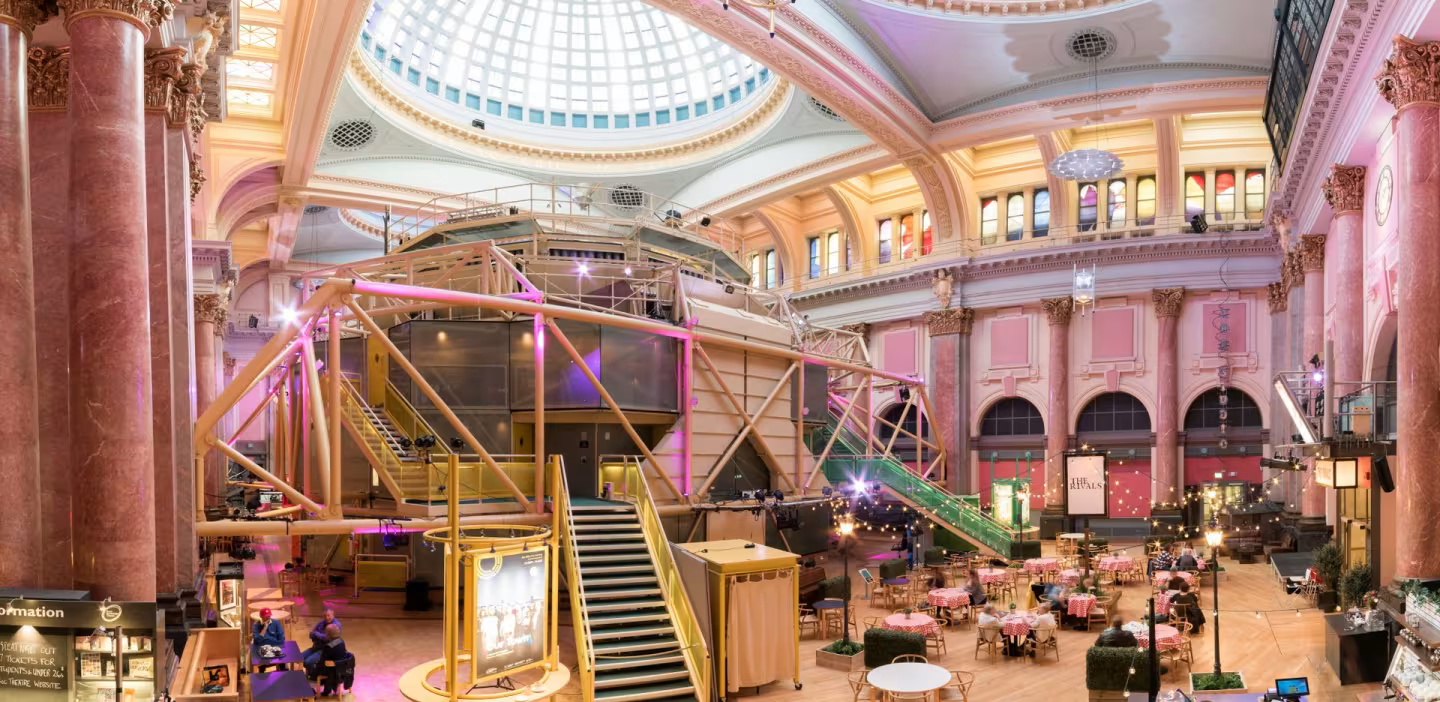
Royal Exchange Theatre - image source: Visit Manchester.
With renewed energy, I walked on to the Royal Exchange itself. Today it functions as a theatre, yet its architecture still echoes its earlier life. The vast dome, the way voices travel in the open space, and the sheer scale of the interior conjure images of the once-booming trading floor. John’s descriptions of visiting Lancashire mills with his uncle and the deafening clatter of the looms added an additional layer as I explored the building. It was moving to stand in a place that shaped the economic and personal trajectories of so many migrant families, including his.
Throughout the day, I was struck by how displacement is not solely a narrative of loss. It is equally a story of reinvention, craft, ambition, and community-building. Armenians in Manchester carved out livelihoods in an unfamiliar environment, while also creating spaces of belonging and cultural continuity and their histories form an integral part of the city’s multicultural fabric (pun intended).
As I made my way home, I felt grateful for the chance to walk in the footsteps of families like the Stambollouians, whose stories illuminate the many ways Armenians have contributed to British life, industry, and economy. With that in mind, this visit also became an opportunity to consider how Manchester’s Armenian history might be shared with wider audiences, and how the city’s own landscapes could become part of a future public narrative. This visit deepened my appreciation for the layered histories that the Heritage of Displacement project seeks to honour, and offered exciting possibilities as we explore locations for a future exhibition that will continue celebrating these remarkable journeys.
Listen below to the Radio 4 episode Out of Armenia, dedicated to the Armenians of Manchester.
We are thankful to John Stambollouian’s son, Ed, for bringing this episode to our attention.