Rediscover a forgotten classic.
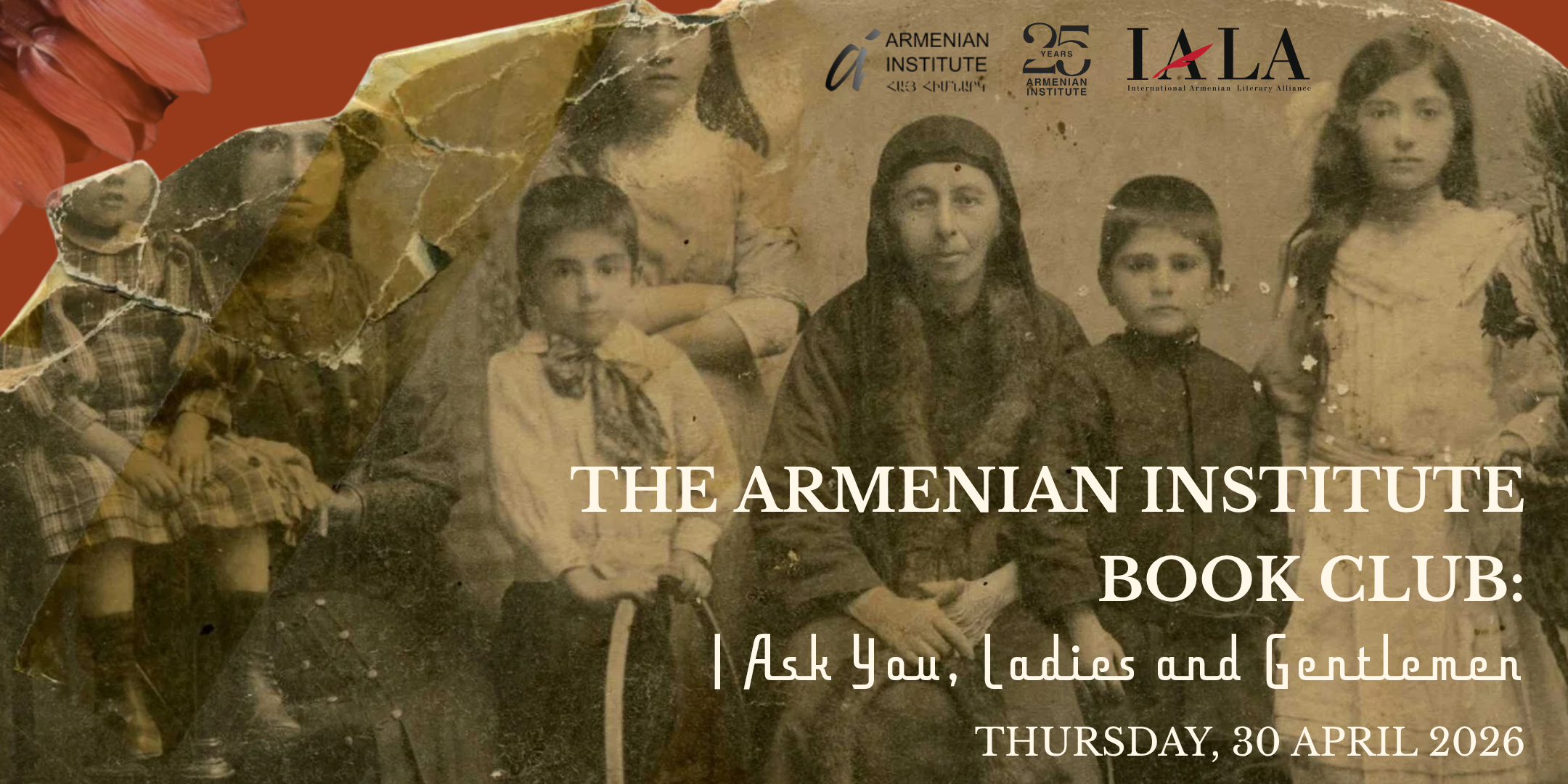
In 1945, Armenian Genocide survivor Leon Surmelian published I Ask You Ladies and Gentlemen, a bestselling, internationally acclaimed memoir that later slipped from view as it became out-of-print. In 2020, the Armenian Institute revived it in a new expanded edition, complete with photographs, maps and historical context, affirming its urgent relevance today.
From a warm childhood in Trebizond, in what is now north-eastern Turkey, to a perilous journey of survival after 1915, Surmelian’s story moves from loss and exile to an unexpected sense of belonging on a farm in Kansas, as his idealistic vision of saving his people through agriculture took him on a scholarship to study in America.
Join us on Thursday, April 30th, at The Armenian Institute or online, for an intimate Book Club evening and a glass of Armenian wine. Hear behind-the-scenes stories from the team that set out on the adventure of republishing the book, led by board member Richard Anooshian. They’ll be joined by Dr Nora Lessersohn, historian of the United States and the Armenian diaspora, who will participate online. Come along to share your thoughts on this remarkable story, and to see the first UK edition of the book from 1946, held in the Institute’s library.
Tickets are available with or without a copy of the book, which we encourage you to acquire in advance, so you can start reading! If you are in the US, you can buy your copy in the following places: NAASR, Abril Books and the Armenian Prelacy.
This event is held in collaboration with the International Armenian Literary Alliance.
This event is part of Heritage of Displacement: Oral Histories from the UK Armenian Communities (2023–2026), funded by a National Lottery Heritage Fund grant, thanks to National Lottery players.
“Today, as political turmoil sends countless underage migrants out on the road across the globe, the stirring story of a child haunted by the unburied dead and searching for refuge is both topical and timeless. In light of the scholarship that is increasingly attentive to the experiences of minorities within minority groups, along with the growing concern among academics for giving voice to the voiceless, this rendition of an Armenian child’s survival is a valuable source for exploring the specificities of children and childhood from a historical and comparative perspective.”
About the speaker
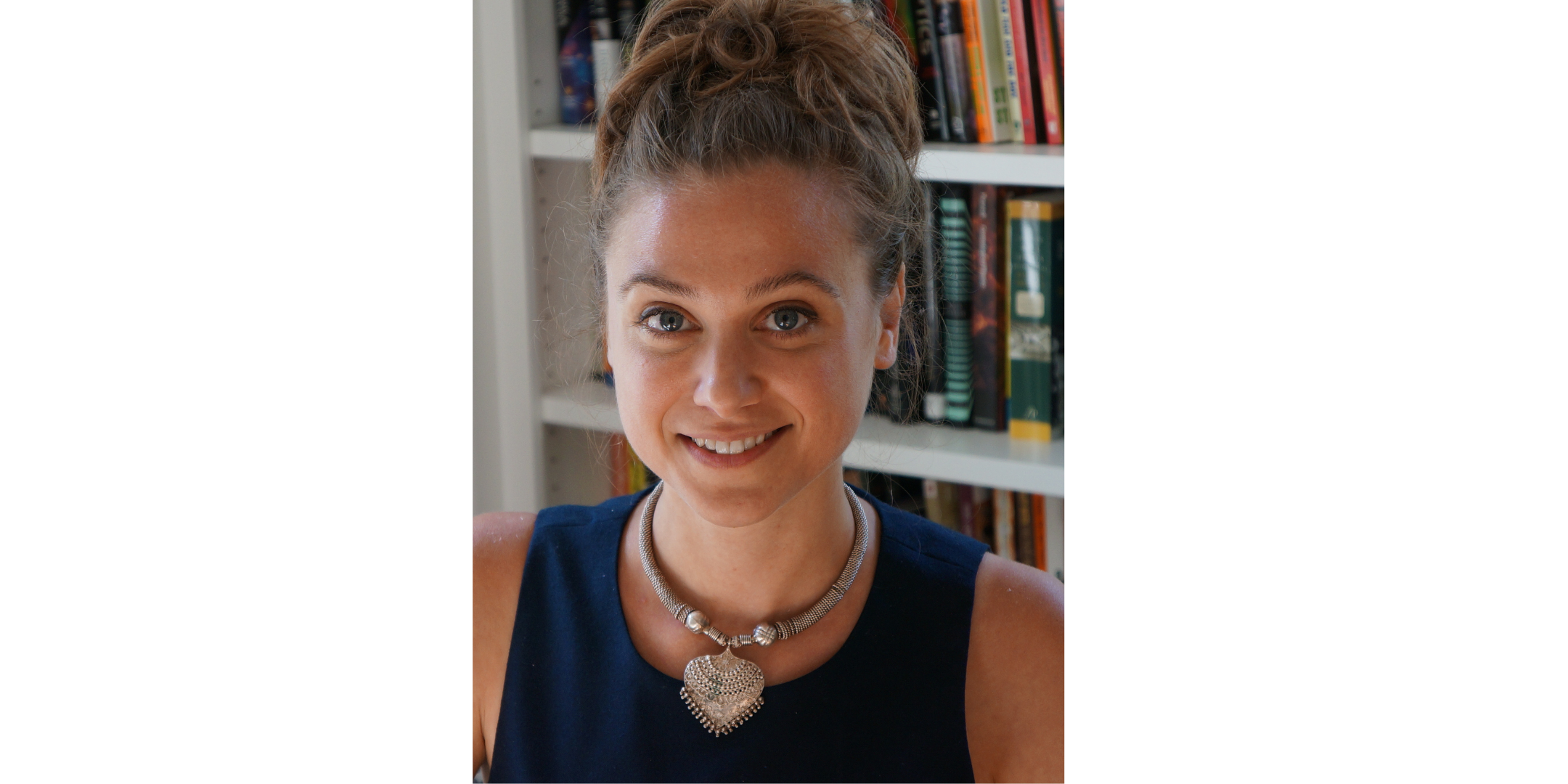
Nora Lessersohn is a historian of the United States and the Armenian diaspora, with particular interests in politics, popular culture, and biography. She has taught at schools including Columbia University and George Washington University, and held fellowships at the Smithsonian American Art Museum and the National Museum of American History. Dr. Lessersohn has published articles on the memoir of her great-grandfather, Hovhannes Cherishian, and is currently completing a manuscript on Christopher Oscanyan's use of New York’s popular entertainment culture to act as a political intermediary between the United States and the Ottoman Empire in the nineteenth century. She is based in Washington DC where she is an Instructor in History at the University of Southern California's Capital Campus.