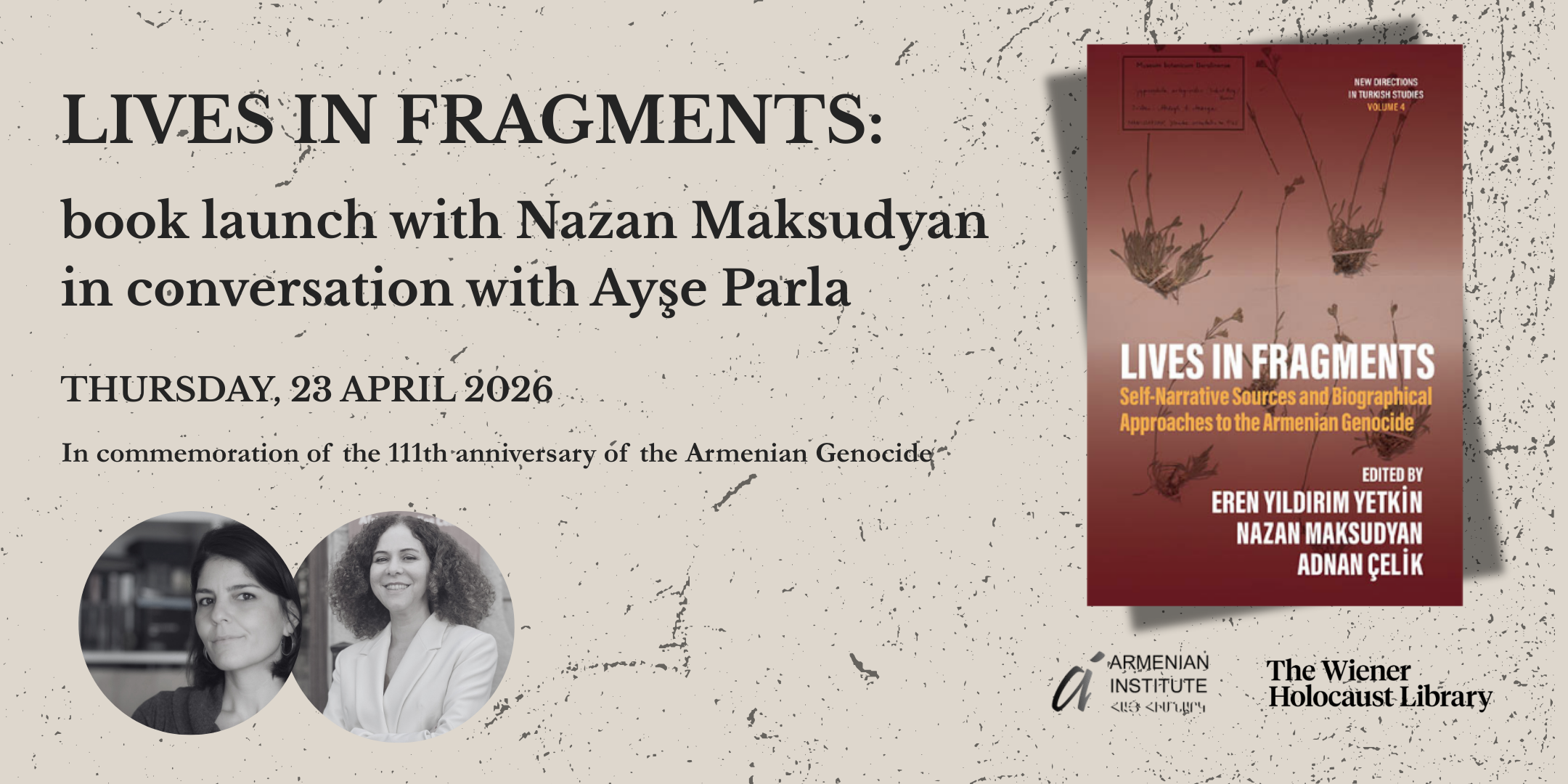
In their new co-edited book, entitled Lives in Fragments: Self-Narrative Sources and Biographical Approaches to the Armenian Genocide, published in February 2026, Eren Yıldırım Yetkin, Nazan Maksudyan and Adnan Çelik explore a new angle through which to interpret the social dynamics that lead to acts of genocidal violence, their remembrance, and their denial.
The twelve chapters in this book, written by experts in the field, focus on life stories and self-narratives that were fragmented and shattered through the historical violence of the Armenian Genocide. It offers a nuanced understanding of genocide’s complex historical and social dimensions.
In conjunction with the Wiener Holocaust Library, and to mark the 111th anniversary of the Armenian Genocide, we are happy to host one of the co-editors, Nazan Maksudyan, who will officially launch this remarkable volume in London and talk us through its novel methodology and rich contents. In conversation with her, we are delighted to welcome Ayşe Parla, who will share insights into her own current research on the art of writing as a survivor in the aftermath of the Armenian Genocide of 1915, tentatively entitled Peripheral Time: Writing as Survival in Bolis/Istanbul After Genocide.
This event is held in partnership with the Wiener Holocaust Library.
About the Speakers
Nazan Maksudyan is a Senior Researcher at the Centre Marc Bloch (Berlin) in the UKRI-funded ERC Grant ‘Ottoman Auralities and the Eastern Mediterranean: Sound, Media and Power, 1789–1914’ and a visiting professor at the Freie Universität Berlin. Her research mainly focuses on the social and cultural history of the late Ottoman Empire and modern Turkey, with special interest in children and youth, gender, sexuality, exile and migration, sound studies, and the history of sciences. She is the author of Türklüğü Ölçmek (Metis, 2005), Orphans and Destitute Children in the Late Ottoman Empire (Syracuse UP, 2014), and Ottoman Children & Youth During World War I (Syracuse UP, 2019). She is an Editorial Board Member of Annales. Histoire, Sciences Sociales, Journal of Women's History, Journal of European Studies, and First World War Studies.
Recently published writing includes: “Beyond Borders and Binaries: Young Ottoman Women’s Experiments with Gender, Body, and Sexuality in Germany During World War I” in First World War Studies 2025; "Crime and Non-punishment: Legacies of Genocide and Denial in Turkey" in Dinç and Hünler (eds) The Republic of Turkey and its Unresolved Issues, Palgrave Macmillan 2025; “Encounter and Memory in Ottoman Soundscapes: An Audiovisual Album of Street Vendors’ Cries”, in McMurray and Mukhopadhyay (eds) Acoustics of Empire: Sound, Media, and Power in the Long Nineteenth Century, Oxford University Press, 2024.
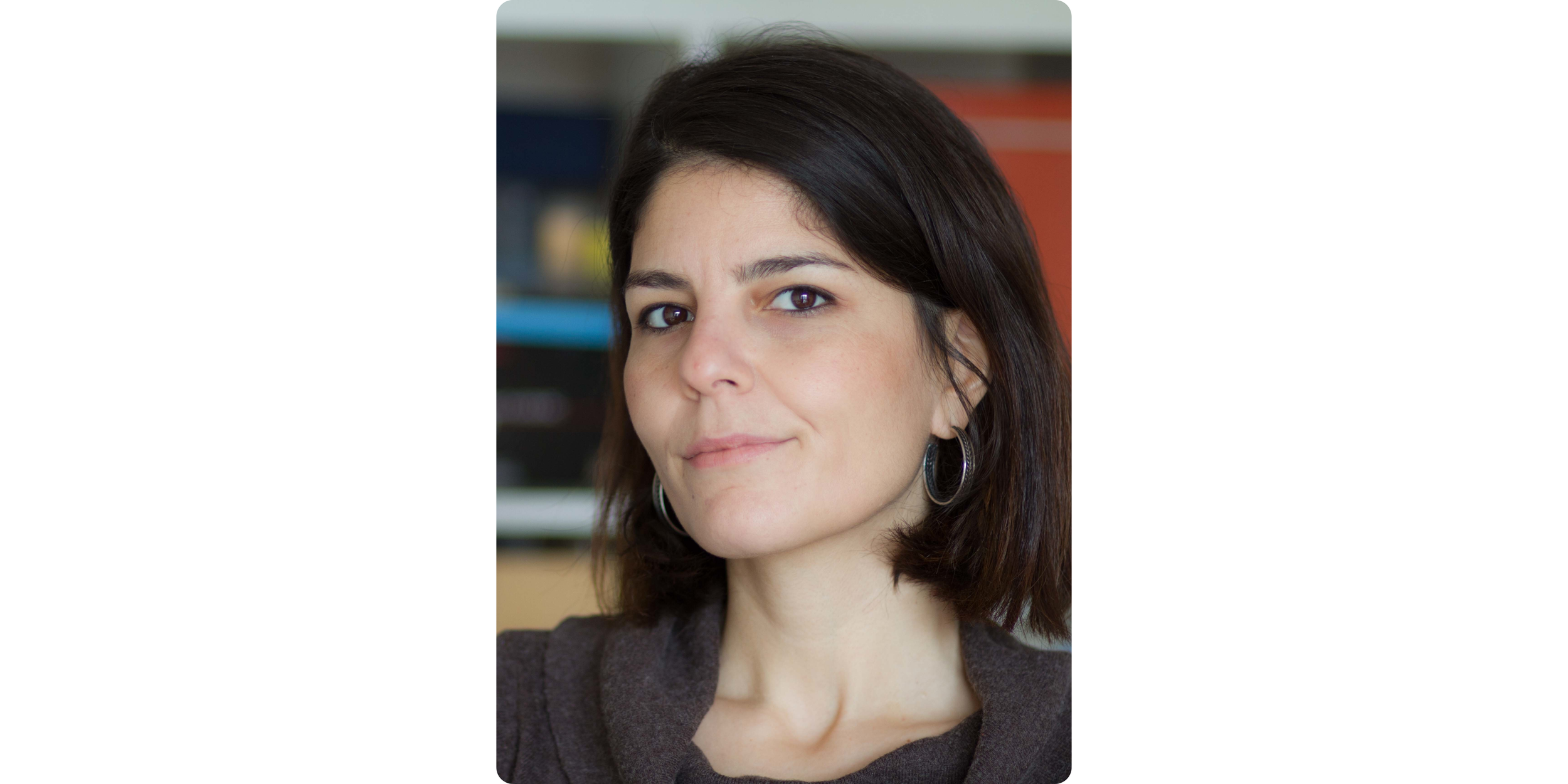
Ayşe Parla is Associate Professor of Anthropology at Boston University and affiliate faculty at their Center on Forced Displacement. She received her B.A. from Harvard and her Ph.D. from New York University. She was a Member and Visitor at the Institute for Advanced Study in Princeton. Her first book, Precarious Hope: Migration and the Limits of Belonging in Turkey (Stanford University Press, 2019), was awarded an honourable mention by the Association of Political and Legal Anthropology. Her work has been published in, among others, American Ethnologist, Citizenship Studies, Comparative Studies in Society and History, Cultural Anthropology, Differences: Journal of Feminist Cultural Studies, History and Anthropology, International Migration, and Public Culture.