
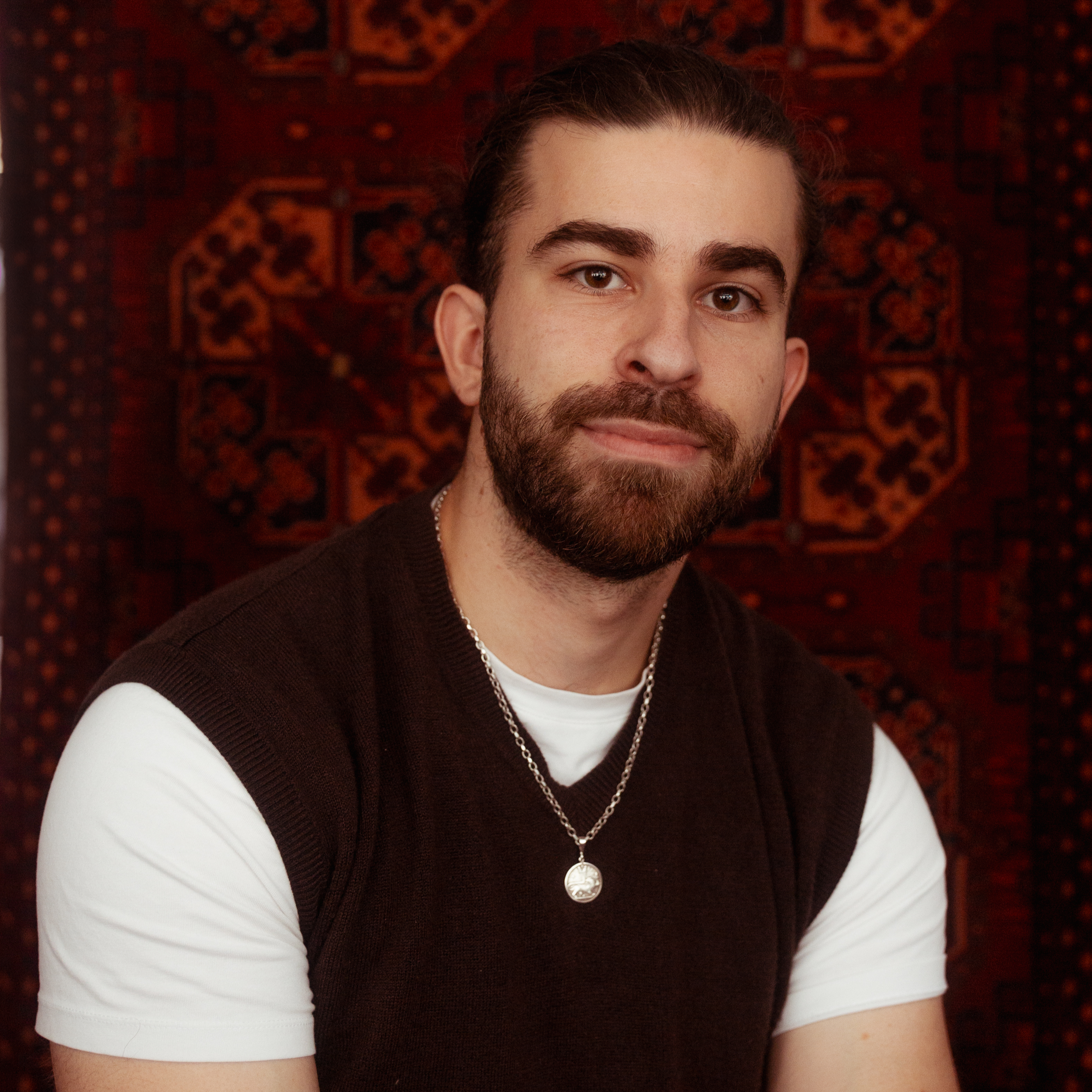
Maxim Saakyan is a UK-based audio producer, documentarian, and director. He is the creator and sole producer of Uncovering Roots, a documentary podcast that digs into untold histories from the SWANA region. The podcast has been featured in The Guardian, Radio Times, and on Spotify, and has built a dedicated audience drawn to its rigorous research and immersive storytelling.
Maxim is currently in post-production on two documentary films shot in 2025. He holds a Bachelors in Mathematics and a Masters in Data and Decision Analytics.
The Baron Hotel, Aleppo
The Baron Hotel once hosted kings, spies, archaeologists, and refugees. It was a grand hotel at the crossroads of empire, war, and survival. In this episode, we trace the layered history of the Baron through the voice of Mary Momdjian, whose family built and ran the hotel for generations. From stories of Armenian refugees during the genocide to cocktails with Agatha Christie, the Baron’s past is woven into the fabric of Syria’s modern history.
Today, it stands abandoned. A fragile, fading symbol of memory and loss.
Pasolini in Beirut
In 1974, three revolutionary elements came together in Beirut: a city at the centre of political and cultural change, a filmmaker who challenged ideas of queerness and power, and a cultural space called Dar el Fan. By 1975, all three were gone. This episode follows not just a moment in history, but a personal search for meaning. For filmmaker Raed Rafei, uncovering Pasolini’s visit to Beirut became a way to explore memory, loss, and the traces of a city that no longer exists. Through letters, archives, and conversations, we piece together a story that links the past to questions we’re still asking today, about queerness, solidarity, and what it means to remember.
There Was There Was Not
Linum e, chi linum. There Was There Was Not. This is how Armenians begin their myths and stories — the equivalent to "once upon a time." Filmmaker Emily Mkrtichian spent several years in Artsakh documenting four women building their lives and fighting for their place in society.
In this episode we follow two of them: Sose, a judo champion dreaming of the Olympics, and Siranush, a politician determined to prove women could lead differently. Then September 27, 2020 arrived, and the question became: what do you do when your world suddenly disappears?
Flags for the Stateless
When Leo Torosian started studying old photographs of Armenian revolutionaries, he noticed something strange: almost every fighter posed with a flag. But these weren’t the neat, simple flags we know today — they were covered in text, embroidered with poems, and broke every rule of good flag design. Now, in his Los Angeles apartment surrounded by recreated flags from the 1890s, Leo has become possibly the world’s only specialist in Armenian revolutionary flags. Following his detective work through faded photographs and museum archives, we uncover how these flags became the lifeline of a stateless people fighting against colonial empires — used not just as battlefield markers, but as propaganda tools photographed in studios and sent worldwide to fund a twenty-year revolution. This is the story of symbols, survival, and what happens when the country you’re fighting for exists only on a piece of cloth.
Aurora Mardiganian
Aurora Mardiganian survived the Armenian Genocide at fourteen, escaped across multiple countries, and was given a mission by the legendary Armenian commander Andranik Ozanian: travel to America and tell the world. Her testimony became a book, and then a film, Auction of Souls, which broke box office records and travelled the globe raising money for Near East Relief. Then it disappeared. This three-part mini-series traces Aurora's extraordinary life, from survivor to Hollywood star to forgotten figure, through her own oral testimonies, interviews with director Atom Egoyan and silent film expert Anthony Slide, and the account of the nurse who cared for her in her final years. At its centre is the story of the lost film itself: how 18 minutes were eventually recovered in Yerevan, just months after Aurora died, and what that recovery means for how we remember the genocide.