Madeleine Kelleyan Artist & Experience Designer
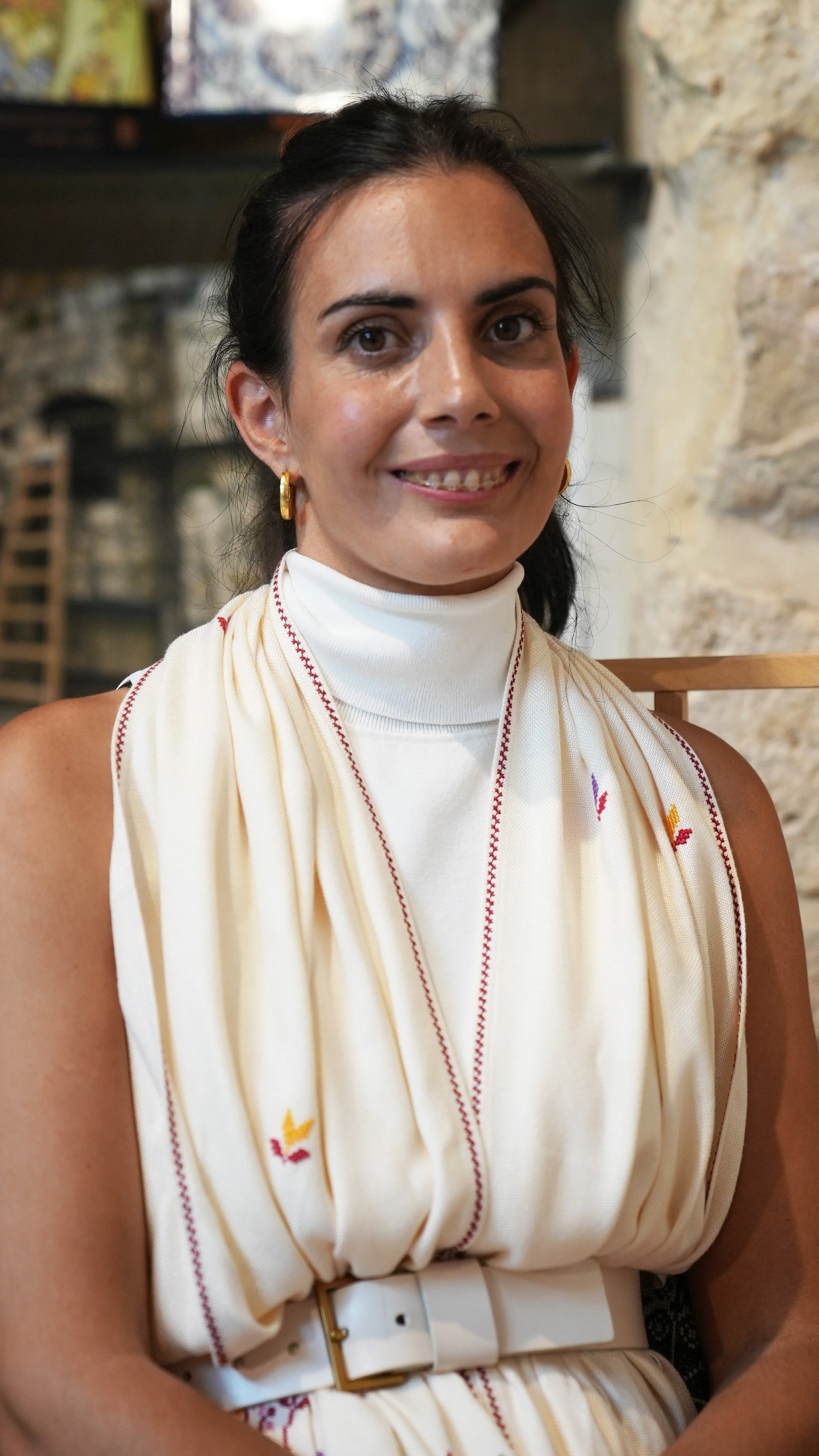
Madeleine Kelleyan is a London-based artist and experience designer specialising in digital cultural heritage. Using immersive tools like VR and AR, she creates portals, interventions in physical and digital spaces that hold space for stories not so often told. Powerful yet empathetic, her work invites audiences to know through feeling, offering multi-sensory experiences that spark connection, interaction, and discovery.
She holds an MA in Information Experience Design from the Royal College of Art. Her work has been featured in Esquire Middle East, Stir World, Hyperallergic & The Dezeen Awards. She has exhibited at London Festival of Architecture, Breeze Film Festival, London Design Festival & SXSW.
She has completed residencies with the Goethe Institut & Al Ma’mal Foundation in Jerusalem as well as Safar Film Festival & the Arab British Centre in London. Her VR project, Stories From My Grandmother’s House, is currently showing at the Museum of Contemporary Art in Belfast as part of The Lost Paintings: A Prelude to Return.
Commercially, she has over 10 years of experience designing interactive projects for clients including The Smithsonian, Bestival & IKEA.
STORIES FROM MY GRANDMOTHER’S HOUSE
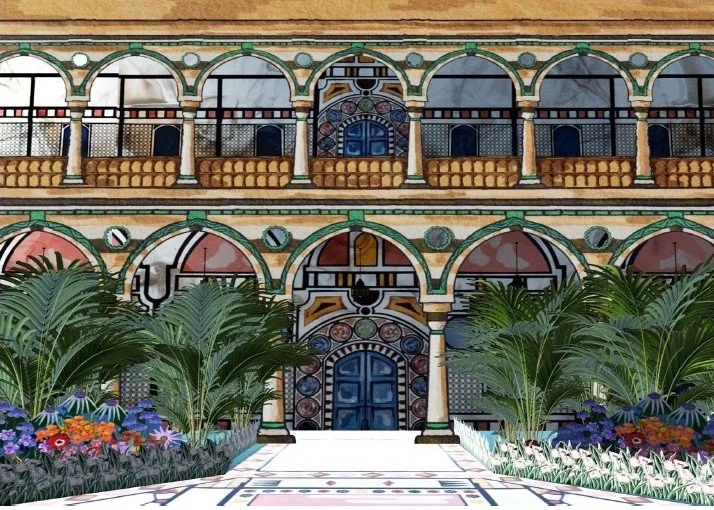

Stories From My Grandmother’s House is a VR experience that follows the love story of my Palestinian -Armenian grandparents across the Middle East. Growing up in the diaspora, the project is designed to hold space for my heritage and experience it as if it is a memory, exploring how digital technologies can reconnect communities with lost spaces and cultures, so that we may ensure a continuity of heritage for future generations. The audience arrives in a room in my grandmother’s house in Haifa in the 1930s, full of my grandfather’s paintings and decorative elements reconstructed from online and family archives, celebrating the rich cultural heritage of both sides of the family. The room functions a little like Narnia, with the audience able to adventure through different objects into scenes from the family story, from a shipwreck off the coast of Akka in the 1780s to the adoption of my grandfather in Aleppo during the Armenian Genocide in 1915, through to my grandparents meeting by chance in Haifa in 1932. The project has been selected for a residency with the Goethe Institut & Al Ma’mal Foundation, and is currently exhibited at the MAC Belfast as part of the Lost Paintings Exhibition.
ARMENIAN CERAMICS | DIGITAL ARCHIVE
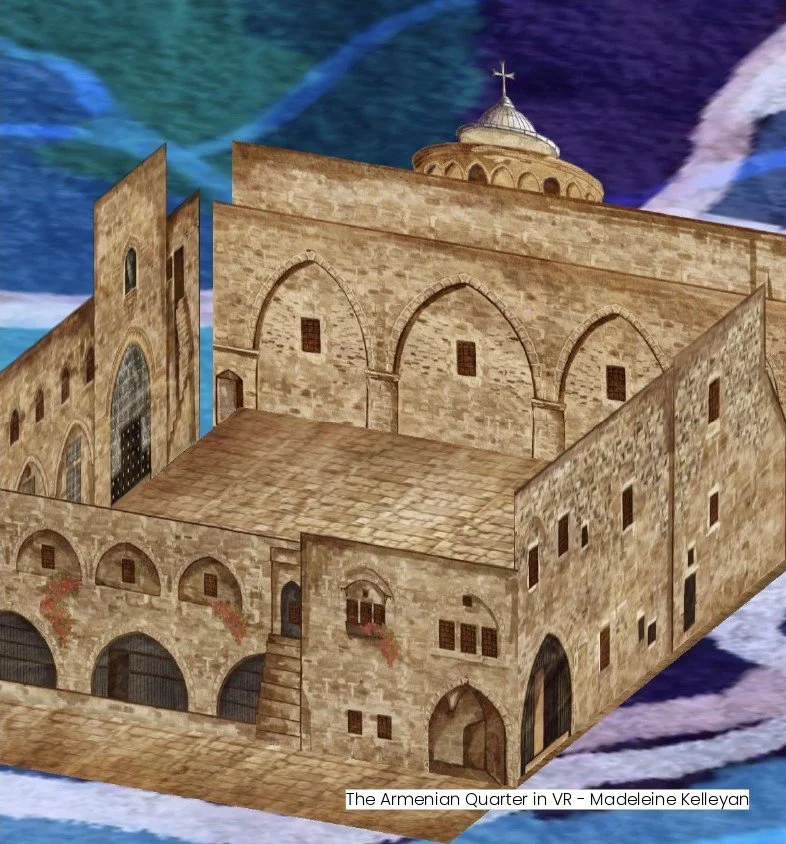
Upcoming for 2026-27, the project is a portal into the stories of the Armenian Ceramics of Jerusalem, mapping the histories of the craft onto the contemporary landscape. Combining technology with storytelling, visual research & interviews (scholars, community, ceramicists), the experience will enable visitors to understand the Armenian Ceramics of Jerusalem not as objects, but as a culture deeply entwined with a sense of place, community and heritage, both from Jerusalem itself and its origins in Kutahya.
The platform will consider how the audience can have agency to explore, offering journeys through the Quarter mapped to different themes, for example, “Historical Origins,” “Craft in Exile,” “Ceramicist Families,” “Patterns as Language,” “Female Histories,” “Jerusalem Public Works” and "New Generation".
Our intention is for the platform to serve as a portal for communities worldwide, offering an accessible means of ‘travel’ to Jerusalem and craft as a lens to tell the story of the ceramics and community.
In collaboration with Kayane Antreassian.
THE SMITHSONIAN | POLYGLOT
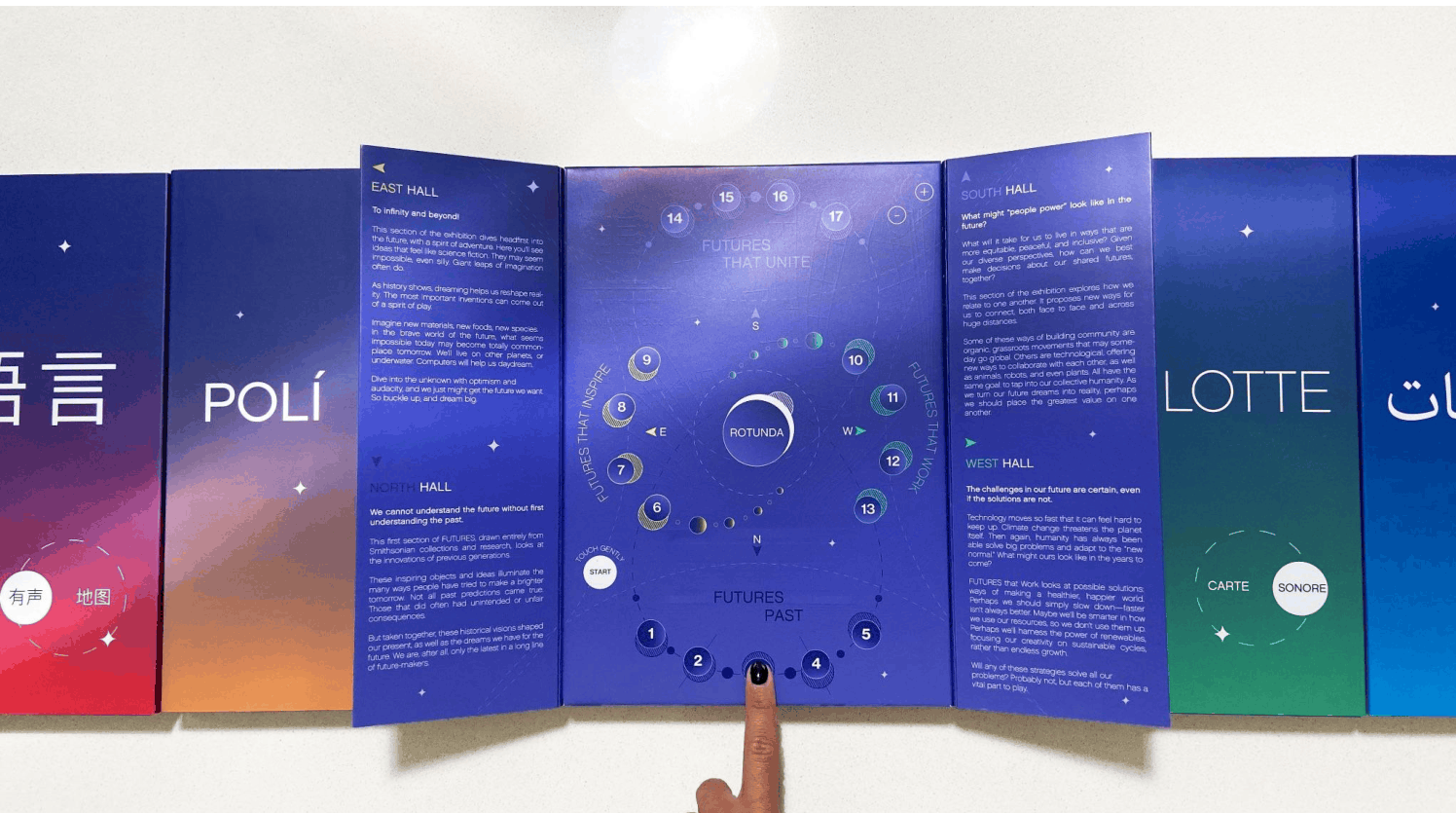
Polyglot is a printed conductive ink audio guide commissioned for the Smithsonian’s Futures Exhibition, designed in collaboration with the curatorial and visitor experience teams. Published in what is expected to be the five lingua franca of the future, Polyglot aims to increase accessibility whilst offering a vision of the future that can embrace technology whilst preserving traditional materials and processes such as print.
Touching the hotspots on the inside of the map allows visitors to orient themselves within the exhibition, as well as enabling them to “follow their nose” and adventure through the content.
THE LIBRARY OF LOST STORIES
The Library of Lost Stories is an ongoing project that combines spatial storytelling in VR with cultural heritage to platform stories that are not so often told. The project takes the form of a series of workshops where participants create an interactive world that reflects their cultural heritage and stories - in their own words, and with their own artwork.
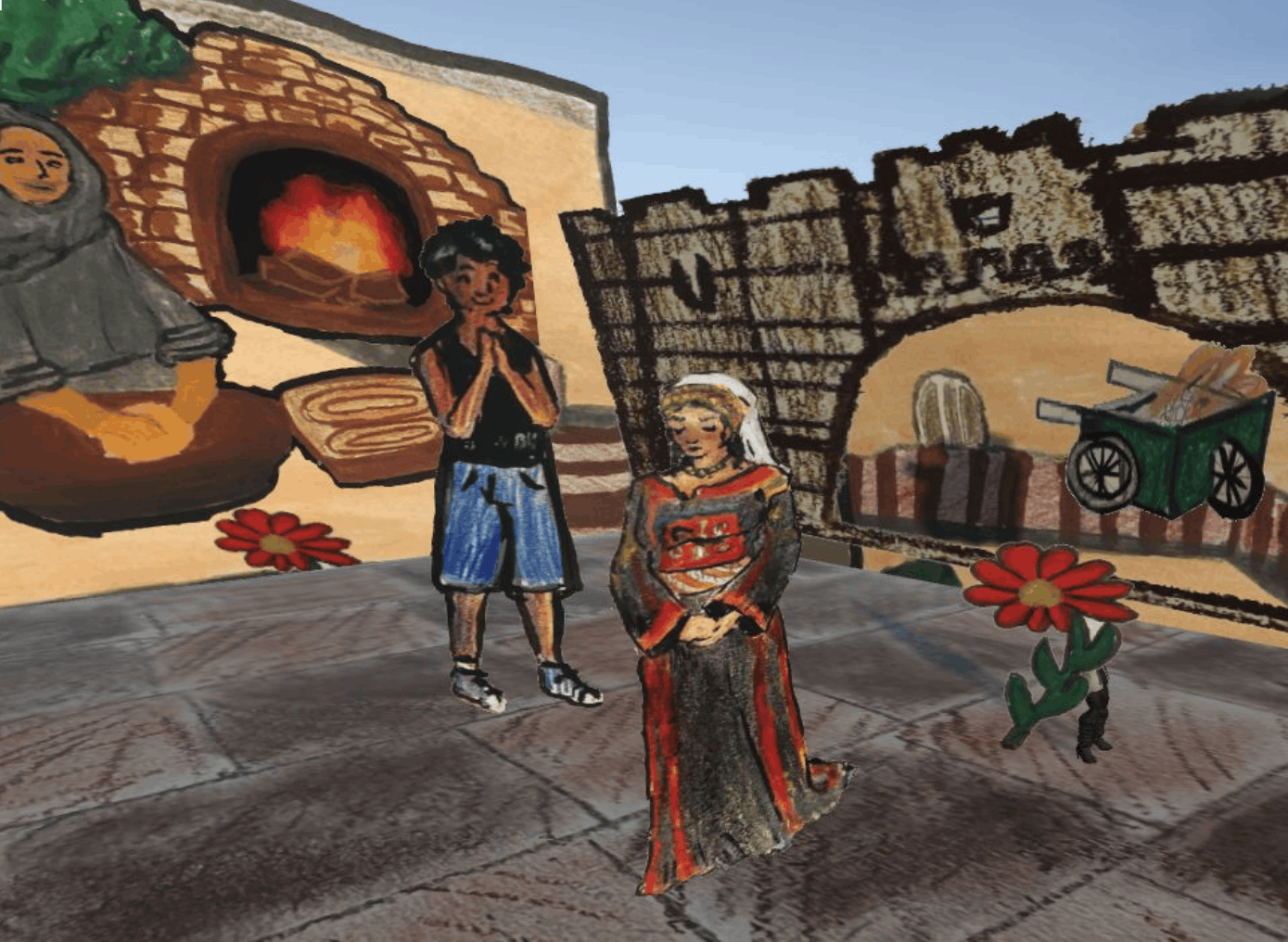
Participants work collaboratively to design the world, exploring sensory and spatial design, as well as visuals and sound for VR. The project can also be viewed without a headset, via the web.
The project to the right illustrates a square in Jerusalem, and tells the story of three people baking bread. It was created by young people in Ramallah, Palestine, as part of the Mishkal Residency, supported by the Goethe Institut and British Council.
You can listen to the story in Arabic and see the world here.
CITY SARHA | AUGMENTED REALITY WALKING TOUR
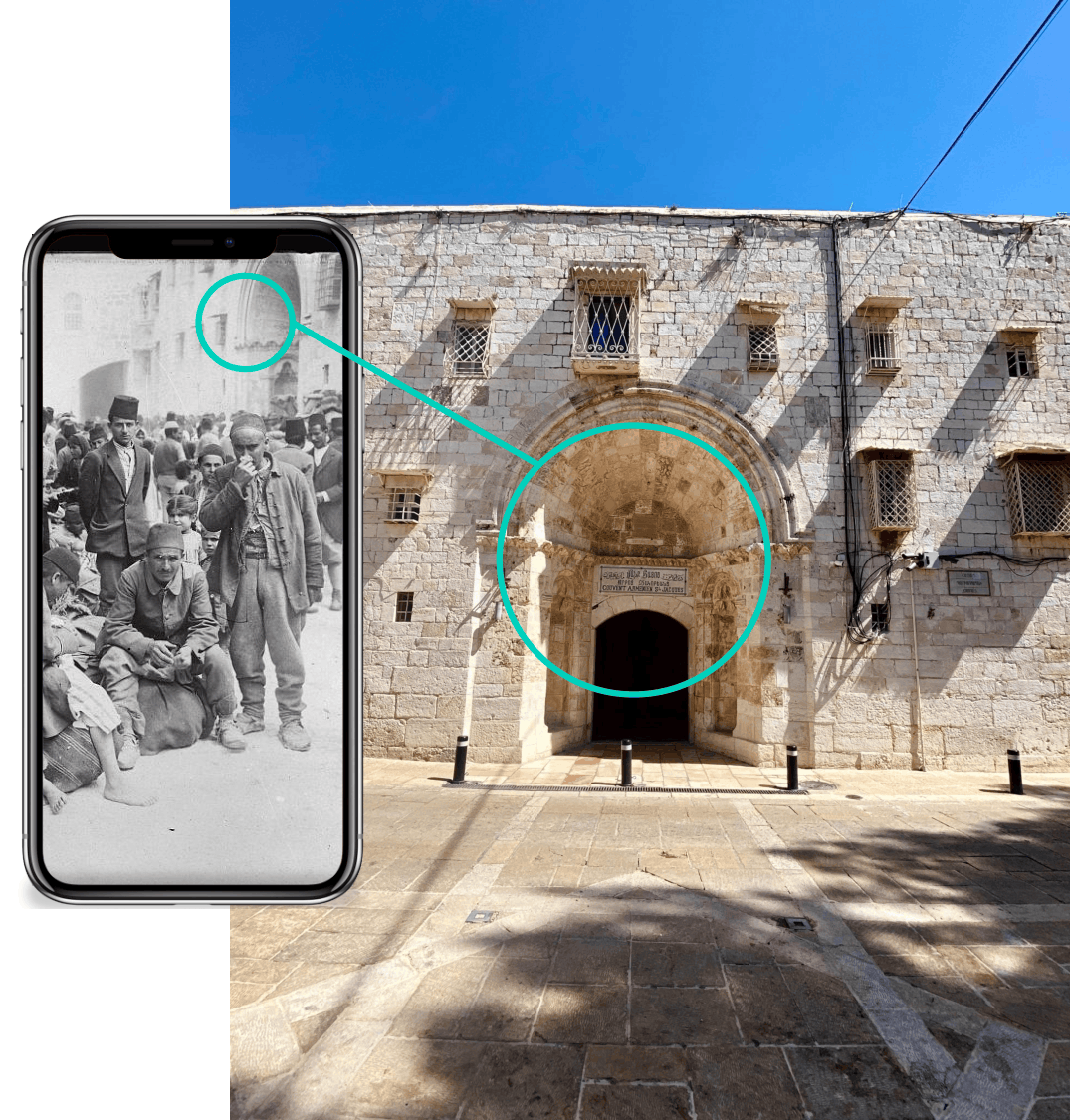
City Sarha is an augmented reality app that brings to life 5 heritage locations in Jerusalem - linking the present spatial realities to life as it was in the British Mandate Period.
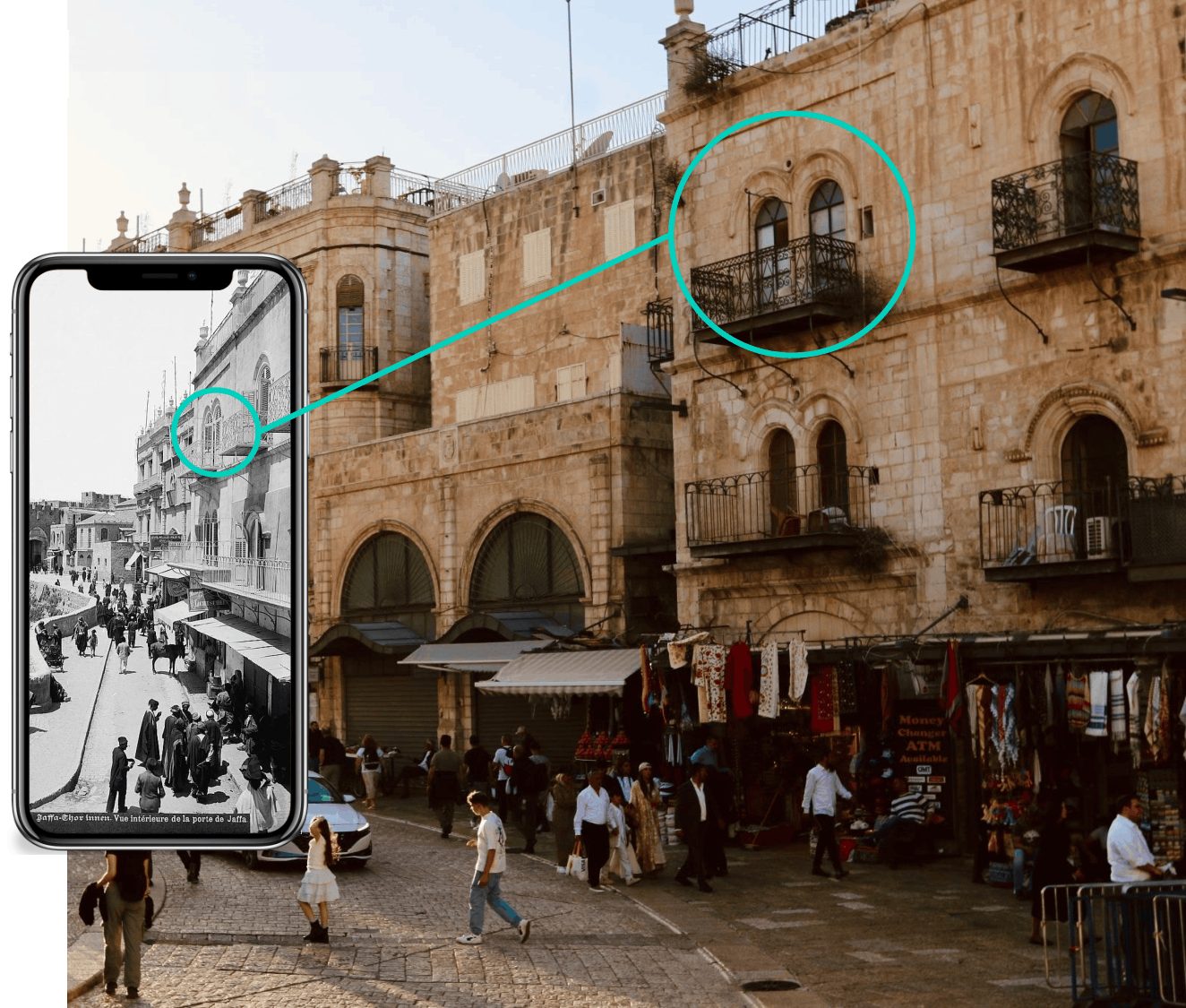
The app takes audiences on a walking tour through the city, bringing to life different locations through sound, imagery and space. The app uses a combination of image recognition to augment street signs, web AR to function, and geolocation to orient the content.
This project is currently in development in collaboration with Sary Zananiri and will be exhibited at Ramallah Design Week in 2026.
Stop 1 | The Armenian Quarter
“My father didn’t know his name.
After he was rescued from the camps by
the Near East Relief Fund, all he could
remember was that his family sold
coffee.
And so we became the Kahvedjians,
once coffee sellers and now the first
Armenian photographers of Jerusalem.”