
Empire on Trial: Rafael v. Verelst
Hosted by the Armenian Institute and generously funded by Souren Israelyan, Esq., the Empire on Trial project brings together rigorous archival transcription, digital publication, interpretive scholarship, and public engagement. Its aim is not only to recover a neglected legal record currently held at the British Library, but to create a living platform for discussion about law, empire, commerce, and diaspora through documents preserved here in London.
This Armenian Institute Special Project seeks to complete the full transcription, preparation, and public presentation of a historically significant eighteenth-century court case that exposes the legal, commercial, and human consequences of British imperial power in South Asia. The case, Rafael v. Verelst (1776), concerns the unlawful detention of Armenian merchants operating in South Asia and their subsequent pursuit of justice in the English courts against Harry Verelst, Governor of the East India Company in Bengal.
The proceedings offer a rare and granular view of the eighteenth-century legal world, revealing how Armenian merchants navigated systems of privilege, protection, and vulnerability within expanding imperial regimes. Through the details of arrest, detention, and appeal, the case exposes the everyday mechanics of imperial authority—how power was exercised through military force, administrative correspondence, and overlapping claims of sovereignty. At the same time, it illuminates the English courts as contested sites of imperial accountability, where individuals displaced by empire sought redress against officials operating thousands of miles away. The narrative traces the lived consequences of monopoly, prohibition, and jurisdictional ambiguity, demonstrating how abstract policies translated into personal ruin, prolonged confinement, and the loss of livelihood.
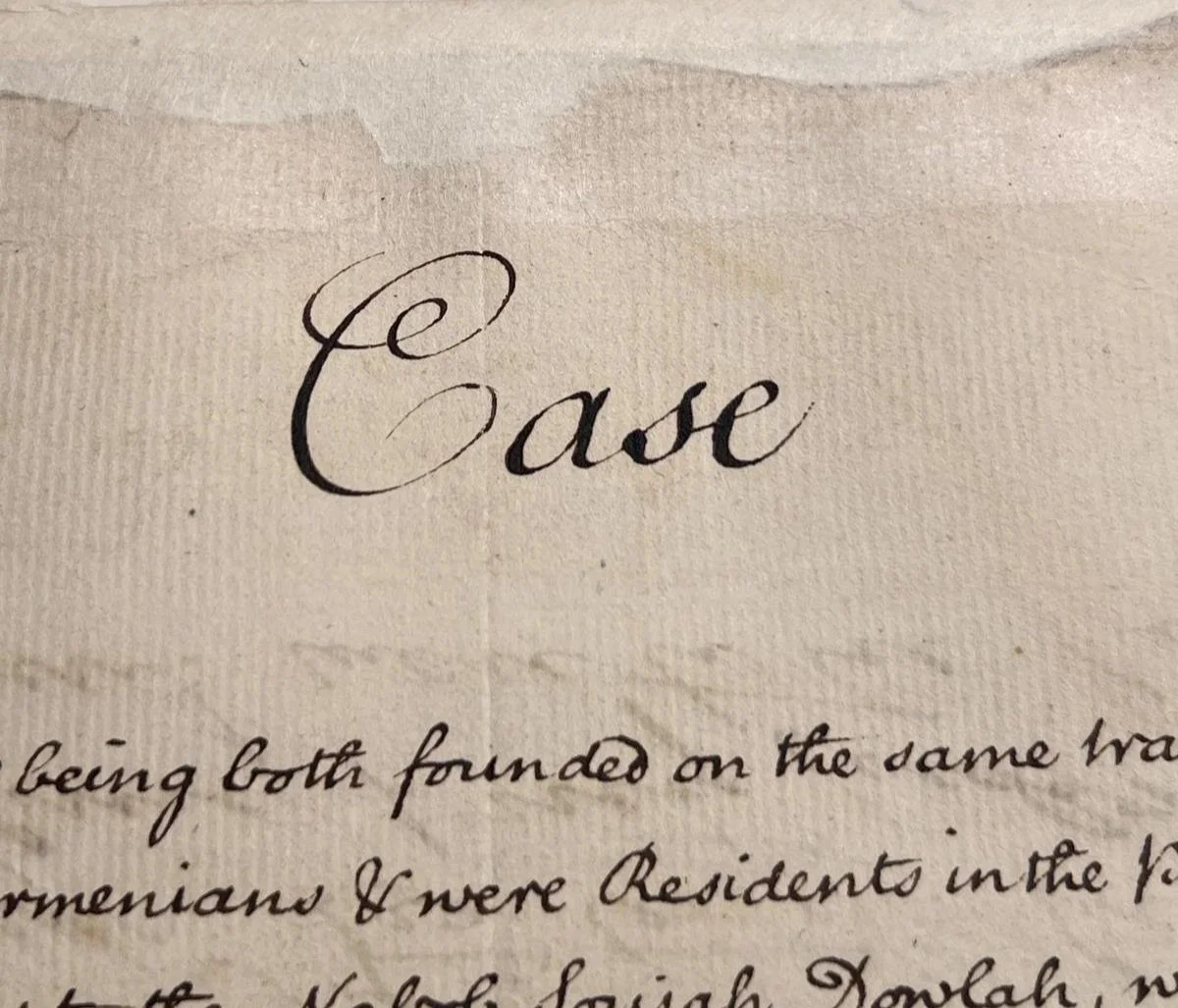
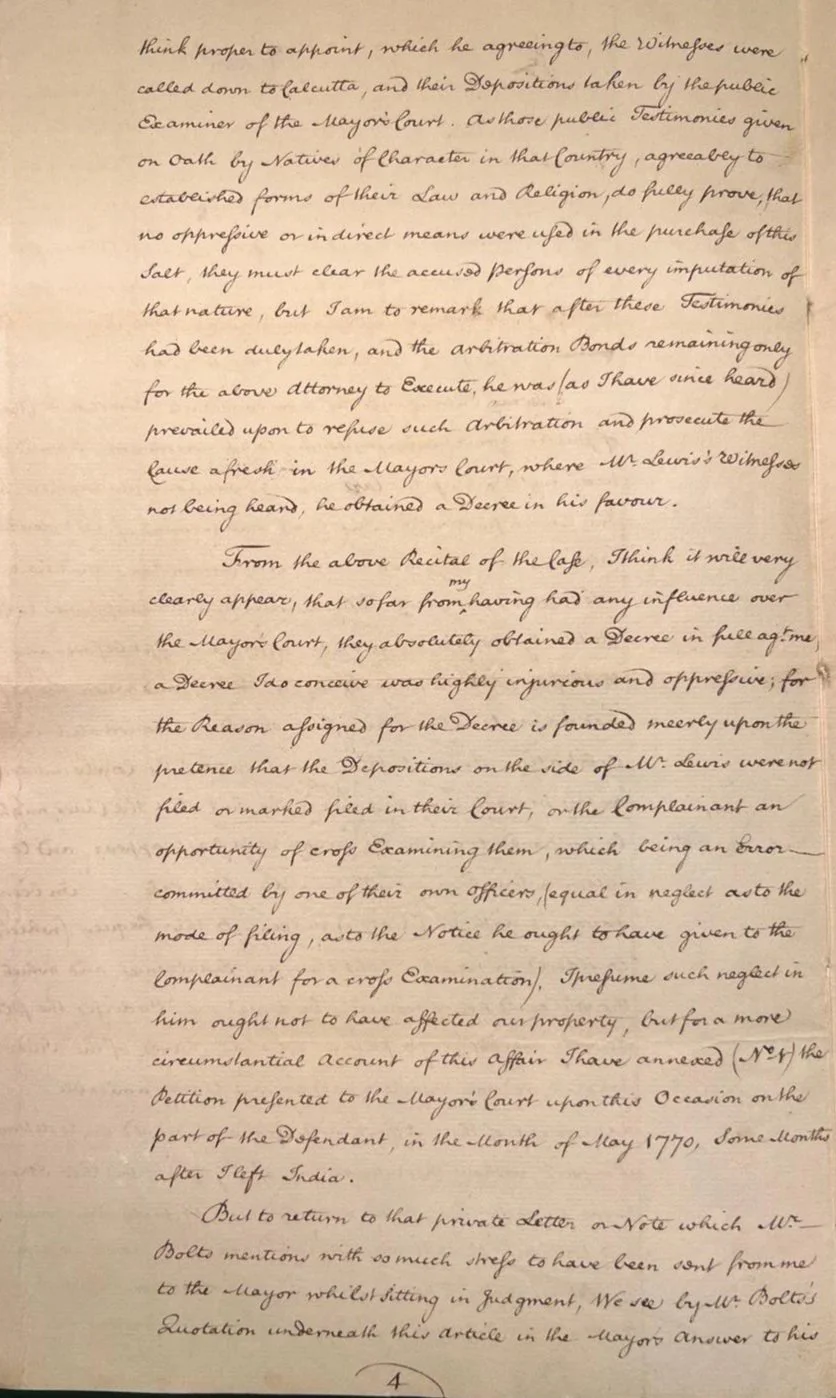
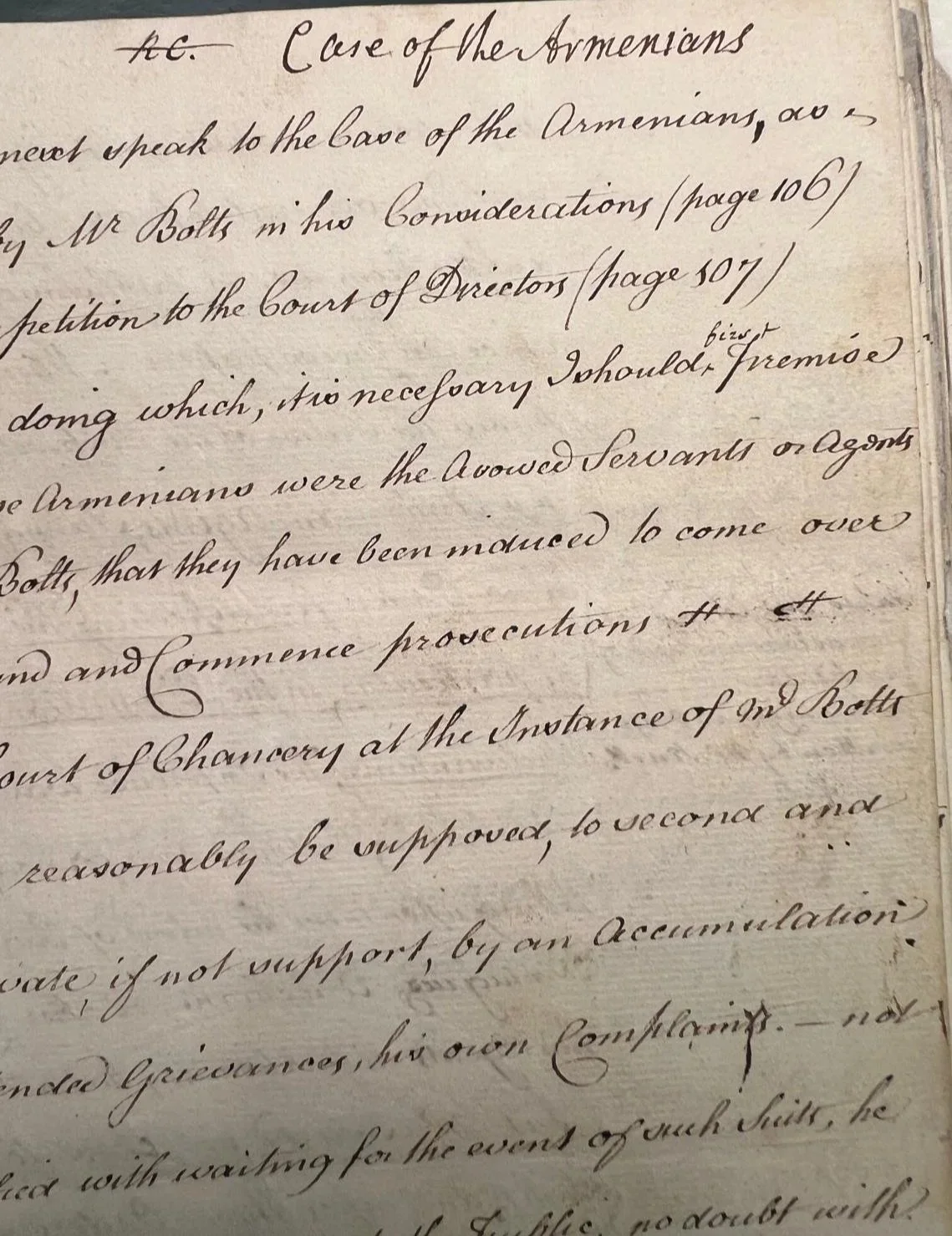
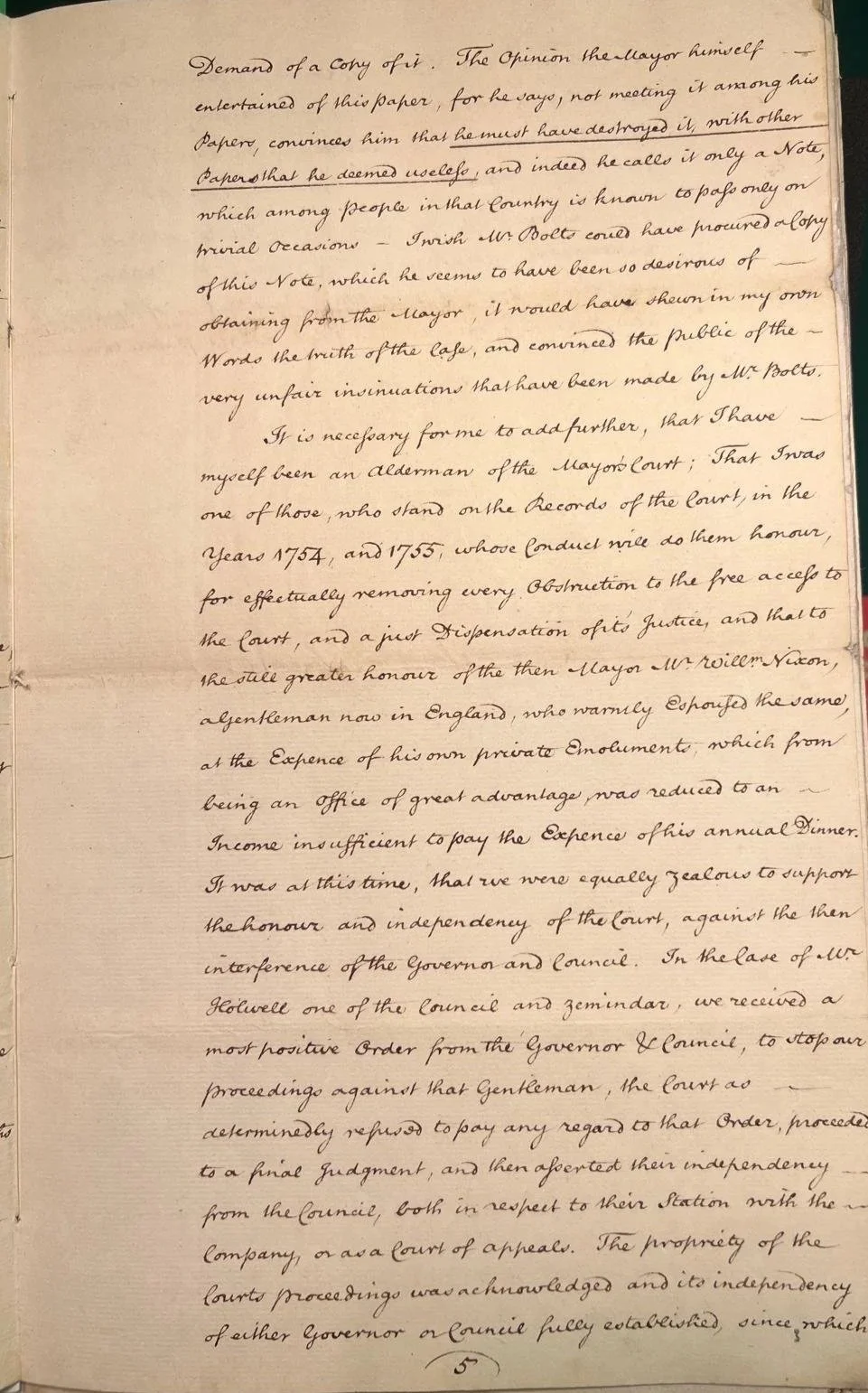
Over the next eighteen months, this work will be carried out in-house by Armenian Institute specialists in Armenian Studies, who will lead the transcription, research, and interpretive framing of the case. As the project unfolds, we will share trial records, scholarly commentary, and new insights into this compelling episode of eighteenth-century mercantile and imperial history.